If you're planning to invest in a greenhouse, one of the biggest decisions you'll face is choosing the right covering material. While there are several options on the market, glass and polycarbonate continue to be the two most popular choices for both commercial growers and home gardeners.
At first glance, the decision seems simple. Glass is known for its crystal-clear appearance, while polycarbonate is praised for its strength and insulation. But once you look beyond those basic differences, you'll find that each material has its own strengths and compromises.
So, in the debate of Glass Greenhouse vs Polycarbonate Greenhouse, which one actually performs better?
The answer depends on what you're growing, where your greenhouse is located, and what you expect from your investment. In this guide, we'll compare the two materials across the factors that matter most, including light transmission, insulation, durability, maintenance, cost, and long-term value.
Understanding the Two Greenhouse Types
Before comparing their performance, it's helpful to understand what separates these two greenhouse coverings.
Glass Greenhouse
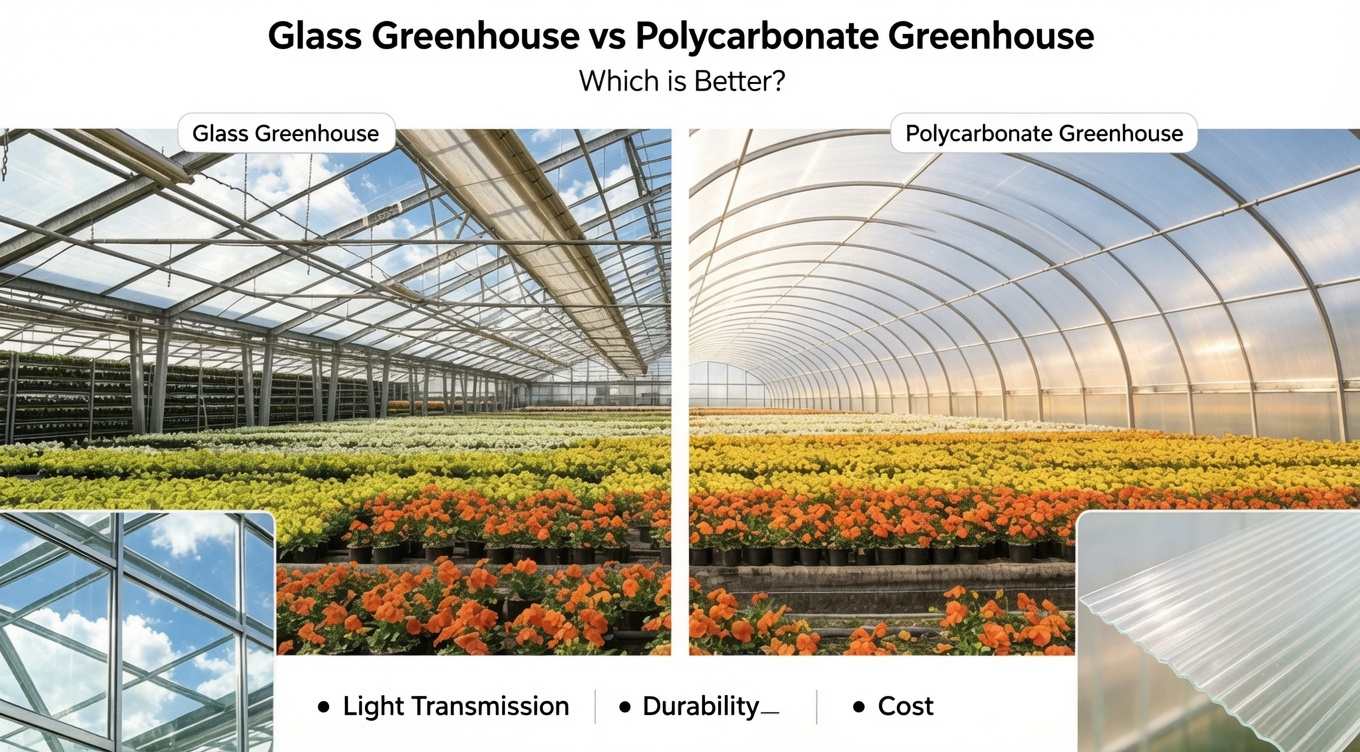
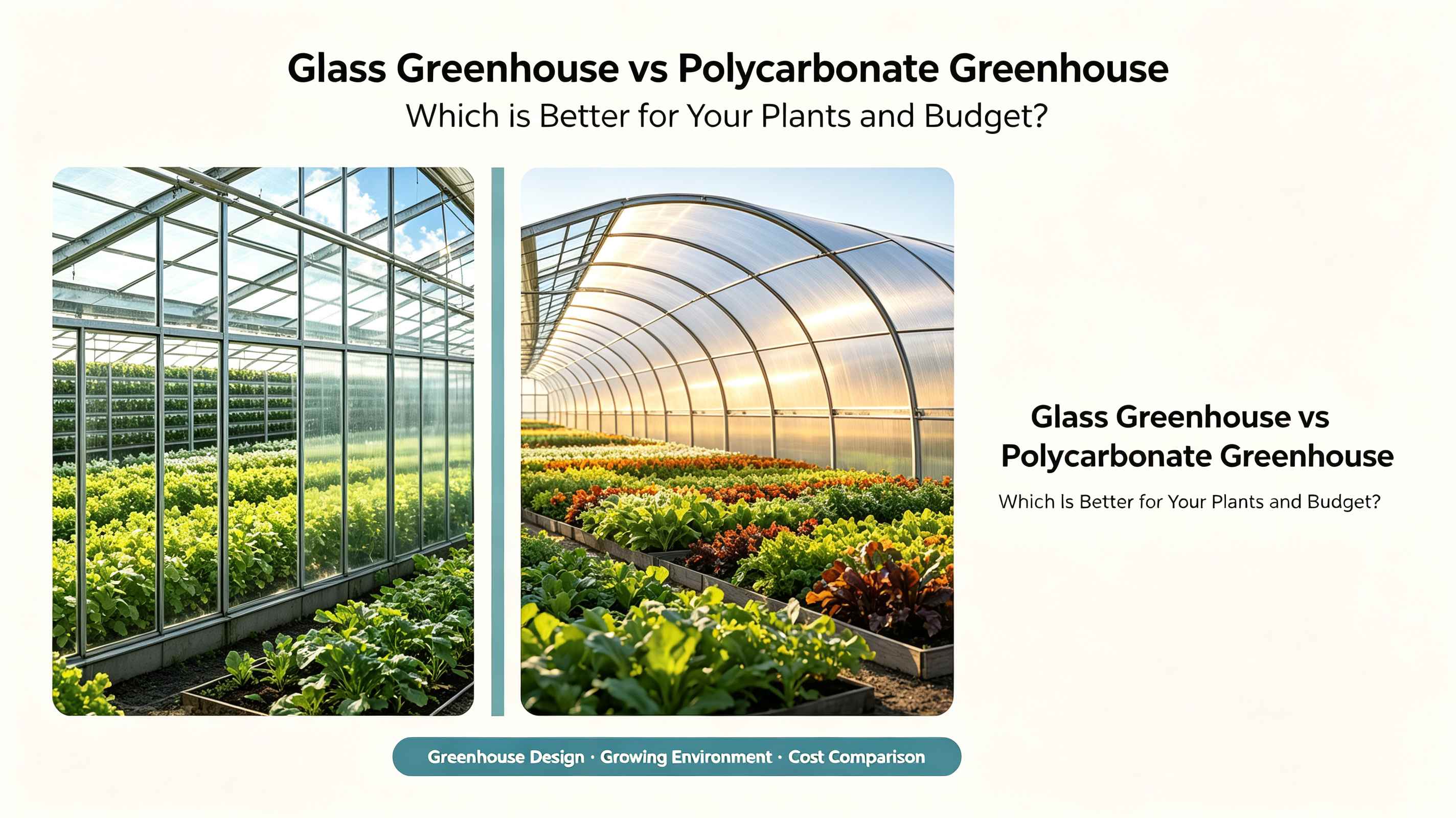
Glass has been used in greenhouse construction for generations, and for good reason. It offers unmatched clarity, allowing plants to receive the maximum amount of natural sunlight. Modern commercial glass greenhouses typically use tempered safety glass supported by galvanized steel or aluminum frames, creating structures that can last for decades.
Many botanical gardens, research facilities, and large commercial farms still rely on glass because of its professional appearance and excellent growing environment.
Polycarbonate Greenhouses
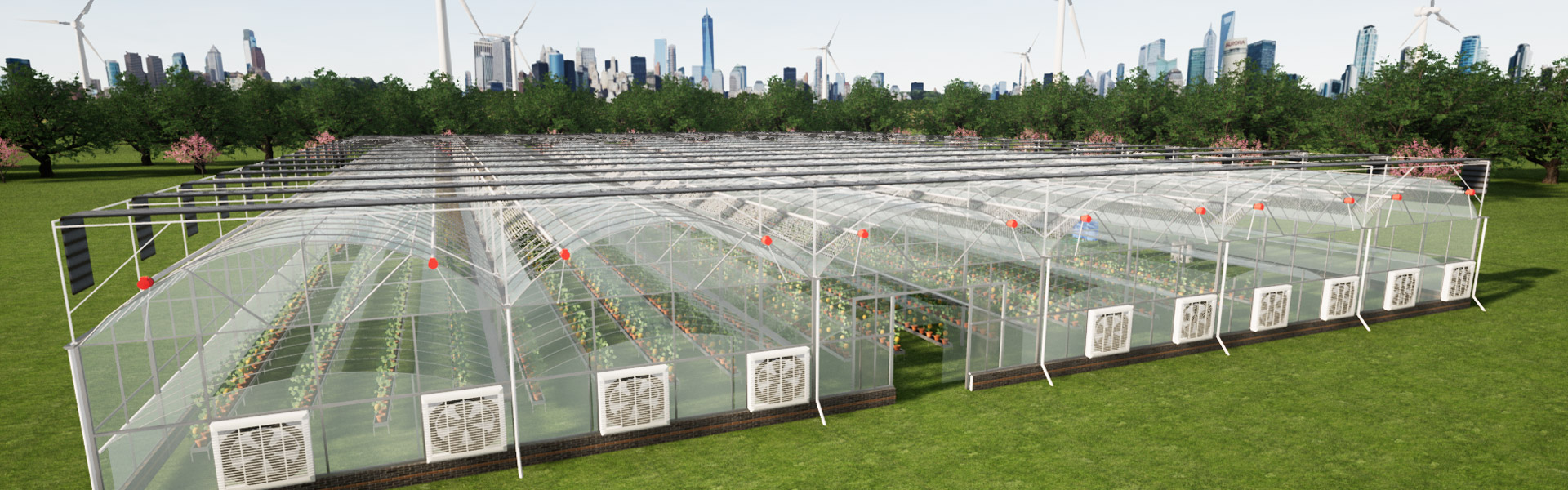
Polycarbonate is a durable plastic material that has become increasingly popular over the past two decades. Instead of a single solid sheet, many greenhouse panels are manufactured with twin-wall or multi-wall designs that trap air between layers. This improves insulation while keeping the panels lightweight and strong.
Because polycarbonate combines durability with energy efficiency, it has become a favorite choice for growers in regions with challenging weather.
Light Transmission: Which Material Gives Plants More Sunlight?
Light is one of the most important ingredients for healthy plant growth. The more usable sunlight reaches your crops, the better your chances of achieving strong growth and high yields.
Glass has long been considered the benchmark for light transmission. High-quality horticultural glass can allow more than 90% of natural sunlight to pass through, creating bright conditions that benefit light-loving crops such as tomatoes, cucumbers, peppers, and many flowering plants.
Polycarbonate doesn't transmit quite as much direct sunlight, but modern panels still perform very well. Depending on the panel type and thickness, they typically allow between 75% and 88% of available light into the greenhouse.
One advantage of polycarbonate is that it naturally diffuses sunlight. Instead of allowing harsh rays to hit plants directly, it spreads the light more evenly throughout the greenhouse. This can reduce hot spots and help plants receive more consistent lighting.
If maximum sunlight is your top priority, glass has the advantage.
Insulation and Temperature Control
Keeping temperatures stable is essential, especially if you're growing throughout the year.
Glass is excellent for letting sunlight in, but it also allows heat to escape more easily. During colder months, this often results in higher heating costs unless double-glazed glass is used.
Polycarbonate performs much better in this area. The air trapped inside multi-wall panels acts as insulation, helping retain warmth during winter and reducing temperature fluctuations between day and night.
For growers in cooler climates, this improved insulation can lower energy bills and create a more stable growing environment.
When energy efficiency matters, polycarbonate is usually the stronger choice.
Durability in Everyday Use
A greenhouse is a long-term investment, so durability should never be overlooked.
Although tempered glass is much stronger than ordinary household glass, it can still crack or shatter if struck by large hail or heavy falling branches.
Polycarbonate is known for its exceptional impact resistance. It can withstand hail, strong winds, and accidental impacts that would damage glass panels. This toughness makes it especially popular in regions with unpredictable weather.
If your greenhouse is likely to experience storms or harsh conditions, polycarbonate provides extra peace of mind.
Appearance and Visibility
For many buyers, appearance is just as important as performance.
There's no denying the timeless appeal of a glass greenhouse. Its clear panels create a bright, open atmosphere and provide unobstructed views both inside and outside the structure. Whether it's placed in a botanical garden or a private backyard, a glass greenhouse has a premium look that's difficult to match.
Polycarbonate has a cleaner, more practical appearance. While modern panels look professional, they don't have the same level of transparency as glass.
If aesthetics are a priority, glass is hard to beat.
Maintenance Requirements
Both greenhouse types benefit from regular cleaning, but the process differs slightly.
Glass has a smooth, hard surface that resists staining and is easy to wash with water and mild cleaning products. It also maintains its clarity for many years with minimal effort.
Polycarbonate also requires cleaning, but extra care is recommended. Abrasive brushes or harsh chemicals can damage the protective coating or leave scratches on the surface.
Neither option is difficult to maintain, but glass generally requires less caution during cleaning.
Installation and Construction Costs
Budget often influences the final decision.
Glass greenhouses usually cost more to build because the panels are heavier and require stronger structural support. Installation is also more labor-intensive, increasing the overall project cost.
Polycarbonate panels are lightweight, making transportation and installation easier. Since the supporting structure doesn't need to carry as much weight, construction costs are often lower.
For growers looking to reduce their initial investment, polycarbonate offers a clear financial advantage.
Long-Term Operating Costs
The purchase price is only part of the overall investment. Operating expenses matter just as much.
Because glass loses heat more quickly, heating systems often need to work harder during winter. Over time, those additional energy costs can add up, especially in colder regions.
Polycarbonate's better insulation helps reduce heating requirements, making it a more economical choice for year-round production.
Many commercial growers find that these energy savings help offset the cost of replacing panels years later.
Lifespan
Glass is known for its longevity. With proper maintenance, a high-quality glass greenhouse can remain in excellent condition for 30 years or more. It won't yellow or become brittle from UV exposure, which helps preserve both its appearance and light transmission.
Polycarbonate panels generally have a shorter service life. Premium products often last between 10 and 20 years before replacement becomes necessary. Modern UV-resistant coatings have improved durability considerably, but they still don't match the lifespan of glass.
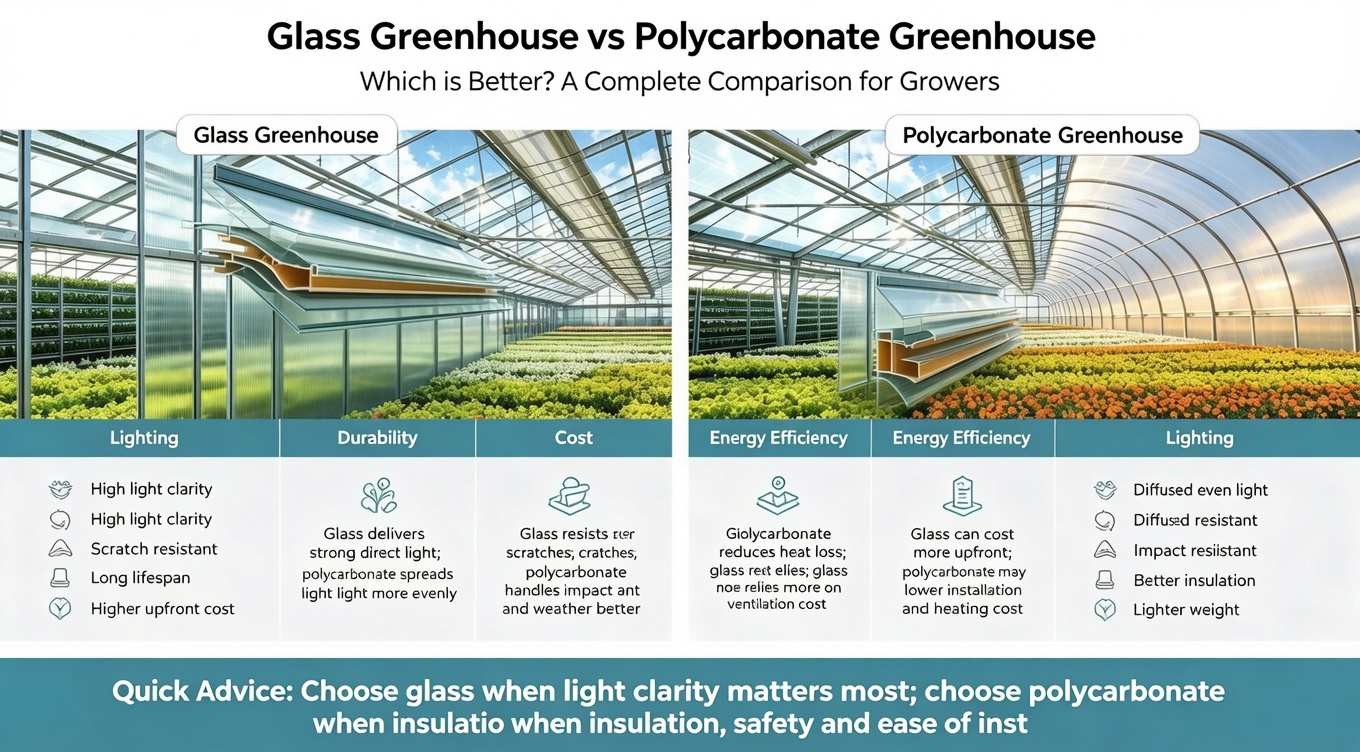
Glass Greenhouse vs Polycarbonate Greenhouse: Quick Comparison
| Feature | Glass Greenhouse | Polycarbonate Greenhouse |
Light Transmission | Excellent | Very Good |
Insulation | Moderate | Excellent |
Impact Resistance | Good | Excellent |
Appearance | Premium | Practical |
Initial Cost | Higher | Lower |
Heating Efficiency | Lower | Higher |
Lifespan | 30–50+ years | 10–20 years |
Maintenance | Easy | Easy with care |
Which One Should You Choose?
The best greenhouse isn't necessarily the most expensive one—it's the one that fits your growing goals.
A glass greenhouse is an excellent choice if you value maximum sunlight, long-term durability, and a premium appearance. It's especially well suited for botanical gardens, research centers, display greenhouses, and commercial operations where light quality is critical.
A polycarbonate greenhouse is ideal if you're focused on energy efficiency, lower construction costs, and resilience in challenging weather. Its insulating properties make it particularly attractive for growers who operate throughout the winter or live in colder climates.
Final Thoughts
The comparison between Glass Greenhouse vs Polycarbonate Greenhouse isn't about declaring one material universally better than the other. Both have earned their place in modern greenhouse construction because they solve different challenges.
If your priority is unmatched clarity, exceptional longevity, and a classic greenhouse appearance, glass remains a proven choice. If you're looking for lower energy costs, greater impact resistance, and a more budget-friendly solution, polycarbonate offers outstanding value.
Before making your decision, think about your local climate, the crops you plan to grow, your available budget, and your long-term operating costs. A greenhouse is an investment that can serve you for decades, so choosing the right material today will pay dividends well into the future.